

Making advanced data science education accessible around the globe
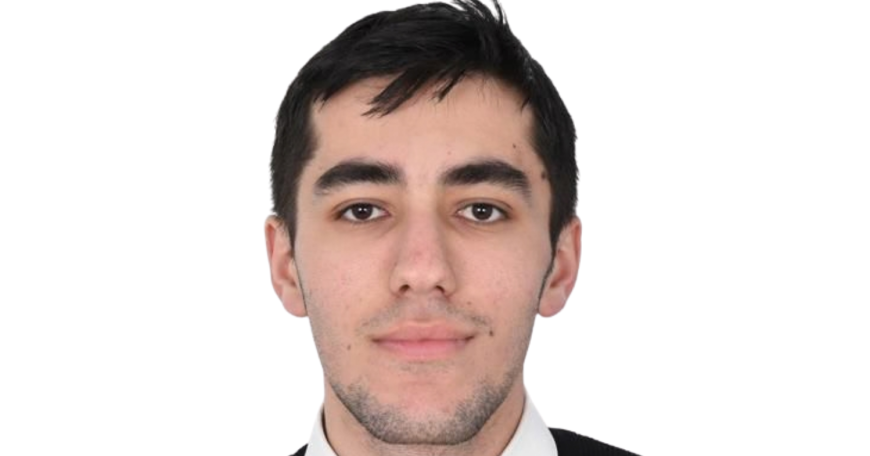
Nihad Isgandarov is currently participating in the MITx MicroMasters Program in Data Science to deepen his expertise as both a researcher and a risk analysis and financial modeling professional. Designed to help learners master the skills needed to solve complex challenges with data, the program has complemented Isgandarov’s work and academic research. As a risk analyst for Xalq Bank, one of the largest banks in Azerbaijan, Isgandarov builds financial models and tests data to develop reliable, actionable recommendations. He is also pursuing a master’s degree in economics at Azerbaijan State University of Economics (UNEC), where his research focuses on green startups in post-Soviet economies and public-goods provision. He and his UNEC team were among the top eight global finalists of the 2026 Spencer-RIMS Risk Management Challenge.
In this Q&A, Isgandarov shares how his online learning experiences have complemented his work and studies.
How did you first learn about MIT Open Learning and why did you pursue the MITx MicroMasters Program in Data Science?
I first discovered MIT Open Learning through online academic communities and recommendations from peers who were already engaged in quantitative economics and data science. My graduate studies in economics, as well as my work as a risk analyst at Xalq Bank, require very strong statistics, data science, and programming skills, and I saw the MITx MicroMasters in Data Science as an ideal way to enhance my capabilities. I also found that the depth, structure, and academic seriousness of the program distinguish it from many other online offerings.
What impact has MIT Open Learning made in your life?
MIT Open Learning has played a critical role in shaping my quantitative and analytical development. Through the MITx MicroMasters in Statistics and Data Science, I gained structured exposure to probability, statistics, and data-driven reasoning at a rigor comparable to on-campus graduate study. I am currently studying 6.431x Probability – The Science of Uncertainty and Data, which has strengthened my ability to think formally under uncertainty, interpret random processes, and connect mathematical theory with applied problems. These skills directly support both my academic work in economics and my practical work in risk modeling and financial analysis.
Beyond the course content, MIT Open Learning has helped me to develop more disciplined study skills, persistence, and intellectual confidence. The access to high-quality lectures, problem sets, and assessments from MIT faculty made advanced education reachable for me, regardless of geography. My experience with MIT Open Learning has reshaped my long-term academic goals and reinforced my commitment to evidence-based decision-making.
Anything else to share about your experience with and how you might use MIT Open Learning in the future?
MIT Open Learning represents a credible and scalable model for global education. It sets a benchmark for how open education can remain rigorous, selective, and impactful. I’ve also found it very valuable to have the opportunity to teach as I learn. As a community teaching assistant for the MITx MicroMasters program, I have been able to help students around the world work through problems in probability, statistical inference, and data analysis.
I’m planning to complete the MicroMasters in Statistics and Data Science in 2027. I’m also very interested in the MITx MicroMasters Program in Data, Economics, and Design of Policy. The program’s offerings related to economics, microeconomics, microeconomics, and finance are very relevant to my graduate studies and career.
This article was originally published on MIT Learn.