

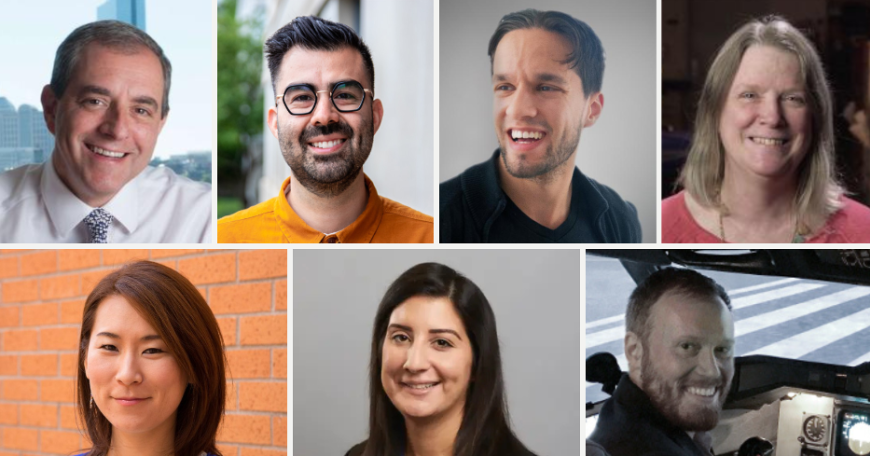
Seven MIT faculty and instructors awarded by students for their outstanding use of technology to improve learning
Seven MIT faculty and instructors have received the 2026 Teaching with Digital Technology Award. Nominated and judged by students who experience learning firsthand, the award honors MIT educators for outstanding use of technology in their teaching.
The 2026 awardees demonstrate commitment to make learning more engaging, meaningful, and impactful. Whether using technologies such as Canvas, gaming, VR, or wikis in effective ways or taking the time to intentionally design and convey materials in tangible ways, the awardees create learning experiences that center the student and build a sense of belonging.
According to awardees, what makes this award truly special is that it’s driven by students. “Having something that comes directly out of the students who have seen the impact of the course and its outcomes [makes this] the most meaningful award,” says 2023 recipient Andreas Karatsolis, senior lecturer and the director of Writing, Rhetoric, and Professional Communication.
Since 2016, the Teaching with Digital Technology Award has been co-sponsored by MIT Open Learning and the Division of Graduate and Undergraduate Education. This year’s faculty and instructor awardees join the ranks of 110 previous recipients.
The winners of the 2026 Teaching with Digital Technology Award are:
David Autor, Daniel (1972) and Gail Rubinfeld Professor of Economics
In 14.003 (Microeconomic Theory and Public Policy), David Autor used Plickers to help students gain confidence to engage in learning. Students recorded their responses to questions then participated in discussion. “When he does ask for an explanation of someone’s response, he never judges their answer (even if they were completely off the mark or outright guessed),” said a student. “He also has excellent intuition for when to use the Socratic method and when to simply explain concepts directly.” Students appreciated his kind and judgement-free guidance.

Héctor Beltrán, Class of 1957 Career Development Associate Professor of Anthropology
Héctor Beltrán designed a highly collaborative course using many technologies to enrich the learning experience and create a sense of belonging for students. In 21A.500J/STS.075J (Technology and Culture) and 21A.504 (Cultures of Computing), unique slideshows and rich multimedia reinforced key ideas of the lecture. “We saw not just his beautiful design,” explained Mariel Garcia-Montez, “but this intentional decision to include student voices and elevate them, to put them in conversation with the theorist that Héctor was discussing in class.” Garcia-Montez is a prior student and teaching assistant, who along with a fellow student said, “Beltran has been by far the most effective and intentional designer of multimedia experiences in the classroom.”
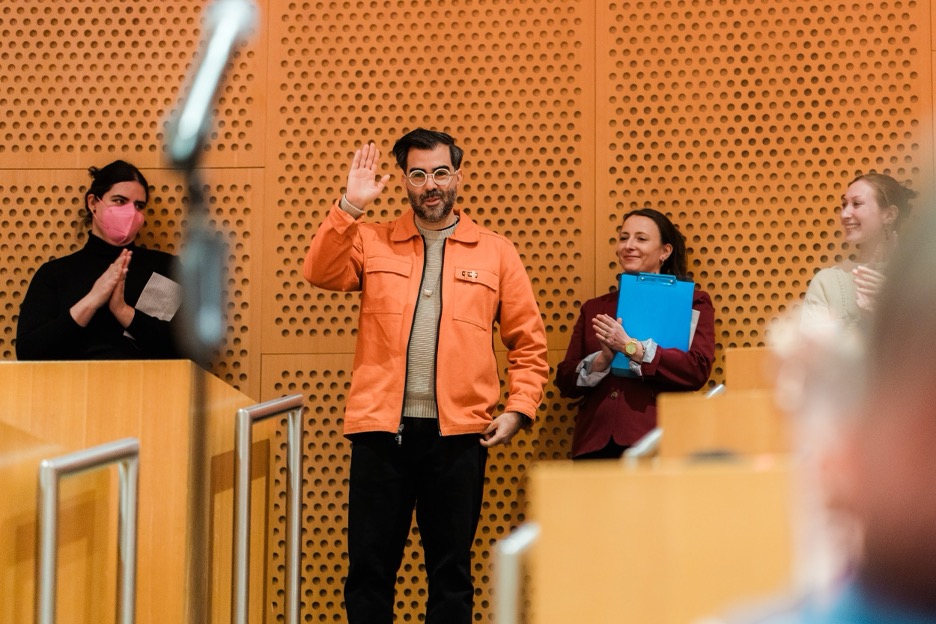
Christian Cardozo, Lecturer for the Edgerton Center and the Experimental Study Group
Students described Christian Cardozo as an incredibly kind teacher who thoughtfully used technologies such as virtual reality and vectors in 3D space. “[He] made the content of the course incredibly accessible, and he truly puts an inspiring effort into communicating concepts in a tangible way in a largely theoretical class,” shared Anna Mohanty, a prior student in ES.1802 (Multivariable Calculus). Even more meaningful is the effort he puts into making students feel welcomed and encouraged. “He let me and other students stay late in office hours to ensure that we each got individual attention. He let me go down random linear algebra rabbit holes when my interest was piqued, and even met with me after class to talk about handling the transition to MIT itself,” Mohanty said. “He is genuinely one of the kindest teachers I have ever had.”

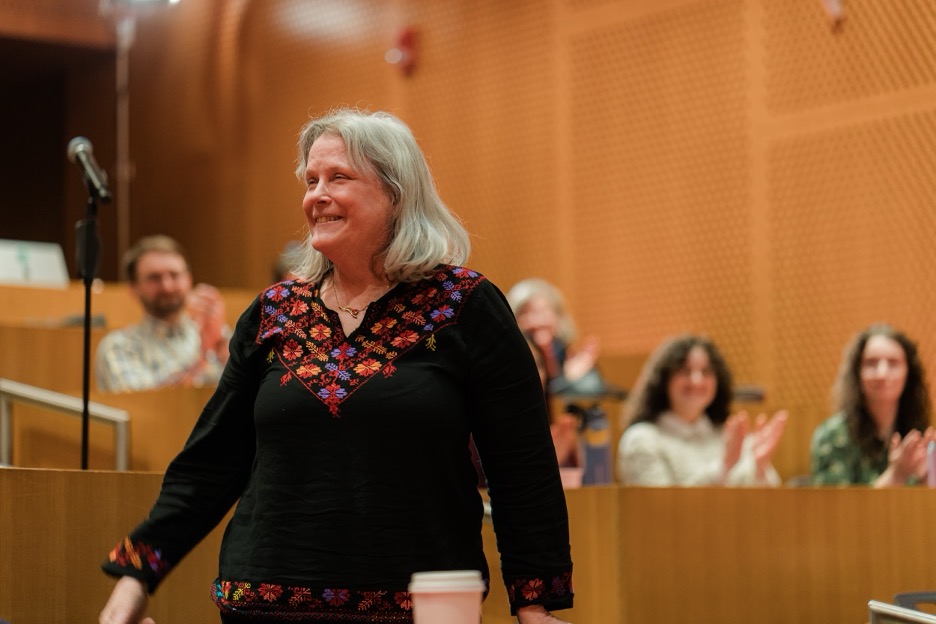
Barbara Hughey, Senior Lecturer in Mechanical Engineering
In 2.671 (Measurement and Instrumentation), students designed and performed experiments, processed data, and interpreted results. As a multi-dimensional course with many useful resources, effective use of digital technologies is crucial. As a prior student in 2.671, Abi Dixon noted, “Dr. Hughey leads the teaching staff in making resources, including assignment descriptions and helpful tips, example research posters and papers, and literature databases easily accessible to students via the 2.671 wiki page.” Beyond the exceptionally managed resources, Barbara Hughey and the teaching staff enabled students to collect precise measurements and customize their projects. “The thoughtful guidance provided to students on how to process their measurement data using Vernier’s Logger Pro collection and analysis software, Excel, and MATLAB makes extracting meaningful data from measurements very accessible to students with varying levels of experience with data processing,” shared Dixon.
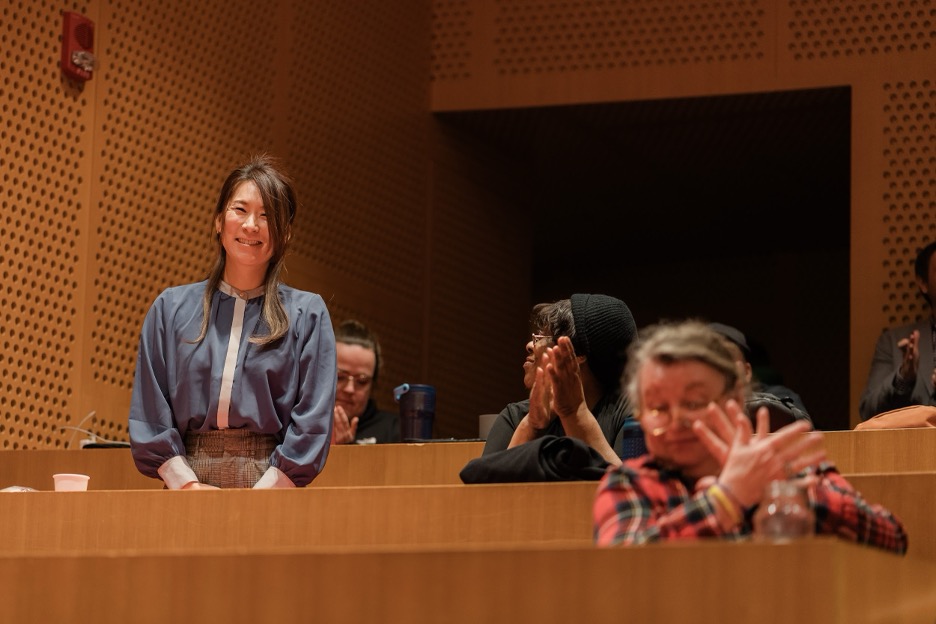
Wakana Maekawa, Lecturer in Global Languages
Students in 21G.S51 (Special Subject: Japanese I) were deeply grateful for the organized course resources and the sense of community that Wakana Maekawa created. Her digital classroom, including pre-scheduled videos and flexible Padlet use, effectively prepared students to practice new content in the classroom. As a student shared, “[She is an] incredible instructor that, most importantly, makes all students feel included, supported, and encouraged to make mistakes that progress the acquisition of course content.”
Basima Tewfik, Assistant Professor of Work and Organization Studies
Students praised Basima Tewfik for her consistent and purposeful uses of various tools such as iDecisionGames in 15.665 (Power and Negotiation). “They not only make classes more interactive and engaging,” said a student, “but she uses them to generate meaningful insights into class dynamics, negotiation outcomes, and behavioral patterns.” Students appreciated the use of real data to reinforce course concepts.
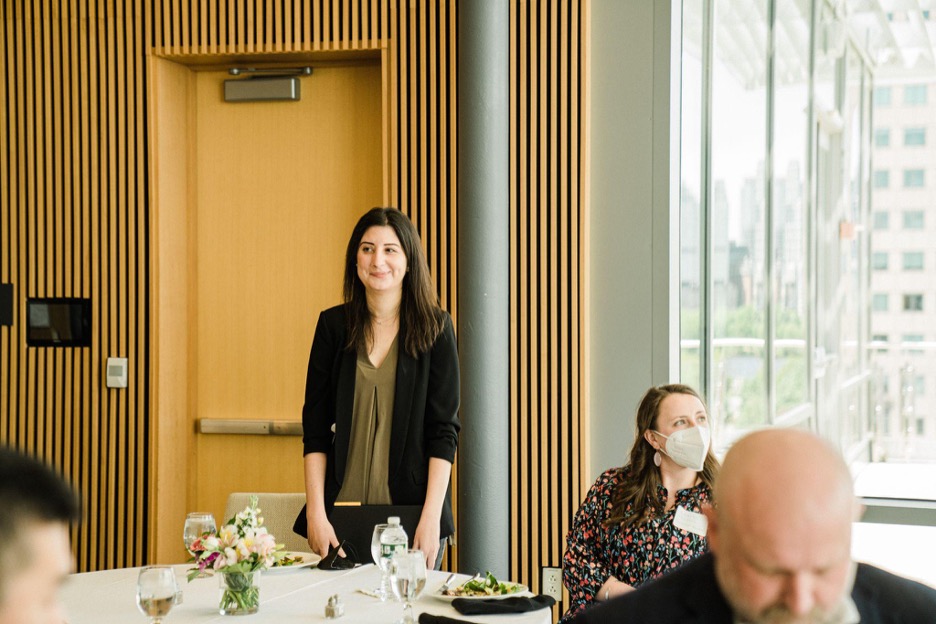
John Thomas, Director of the Engineering Systems Laboratory Safety and Cybersecurity Group
John Thomas leveraged Zoom Whiteboard for active learning and discussion, and constantly gathered student feedback. In 16.863 (System Safety), students put systems thinking into practice, considering different perspectives and the component interactions that may have contributed to a crash. Students were placed in small groups to talk together over a digital whiteboard, then Thomas brought everyone back together on a big screen. “We would see everybody's work together and he would kind of zoom and pan around, and we would kind of discuss,” explained Austin Baker, a prior student. “He would give feedback in real time on what we would put on the whiteboard, on our thought processes to get to those answers, and we were able to give feedback to each other.”

Congratulations to the 2026 awardees, who were celebrated on January 28, 2026!
Learn more about the Teaching with Digital Technology Awards.